KingRezaPahlavi ARMY retweeted

اگر واقعا دغدغه حمایت از حق آزادی بیان و امنیت برای همگان دارید، لطفا از هم میهن خود که در خطر دیپورت به ایران و مخاطرات جانیست حمایت کنید. change.org/p/save-life-of-ir…پتیشن حمایت از کاوه طاهری@MrJournaliste


Save Life of Iranian Journalist and Activist, Kaveh Taheri in Danger of Deportation - Sign the Petition! c.org/BNYDDDZzTG via @UKChange
2
2
62
كويتية وافتخر retweeted

بيان مشترك
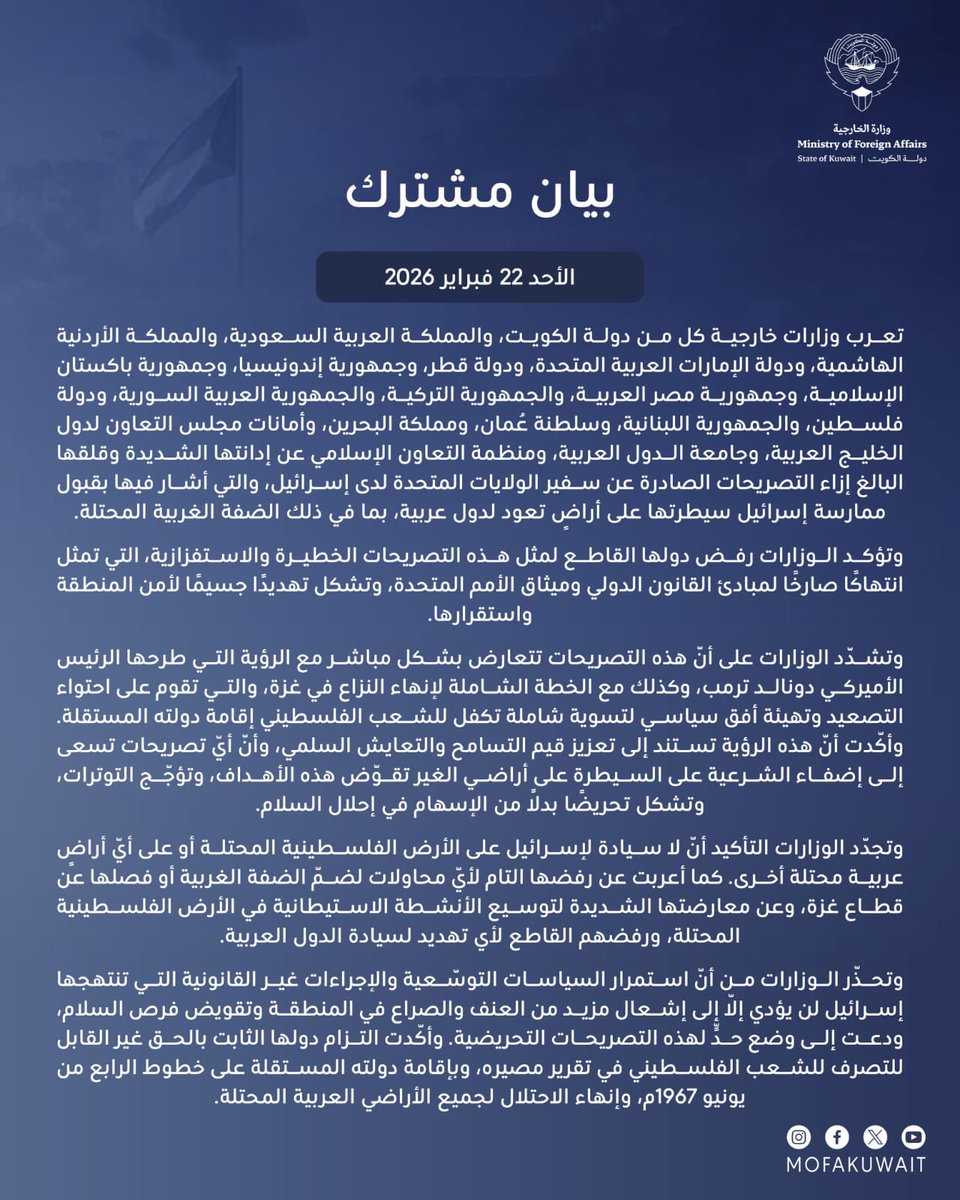
تعرب وزارات خارجية كل من دولة الكويت، والمملكة العربية السعودية، والمملكة الأردنية الهاشمية، ودولة الإمارات العربية المتحدة، ودولة قطر، وجمهورية إندونيسيا، وجمهورية باكستان الإسلامية، وجمهورية مصر العربية، والجمهورية التركية، والجمهورية العربية السورية، ودولة فلسطين، والجمهورية اللبنانية، وسلطنة عُمان، ومملكة البحرين، وأمانات مجلس التعاون لدول الخليج العربية، وجامعة الدول العربية، ومنظمة التعاون الإسلامي عن إدانتها الشديدة وقلقها البالغ إزاء التصريحات الصادرة عن سفير الولايات المتحدة لدى إسرائيل، والتي أشار فيها بقبول ممارسة إسرائيل سيطرتها على أراضٍ تعود لدول عربية، بما في ذلك الضفة الغربية المحتلة.
وتؤكد الوزارات رفض دولها القاطع لمثل هذه التصريحات الخطيرة والاستفزازية، التي تمثل انتهاكًا صارخًا لمبادئ القانون الدولي وميثاق الأمم المتحدة، وتشكل تهديدًا جسيمًا لأمن المنطقة واستقرارها.
وتشدّد الوزارات على أنّ هذه التصريحات تتعارض بشكل مباشر مع الرؤية التي طرحها الرئيس الأميركي دونالد ترمب، وكذلك مع الخطة الشاملة لإنهاء النزاع في غزة، والتي تقوم على احتواء التصعيد وتهيئة أفق سياسي لتسوية شاملة تكفل للشعب الفلسطيني إقامة دولته المستقلة. وأكّدت أنّ هذه الرؤية تستند إلى تعزيز قيم التسامح والتعايش السلمي، وأنّ أيّ تصريحات تسعى إلى إضفاء الشرعية على السيطرة على أراضي الغير تقوّض هذه الأهداف، وتؤجّج التوترات، وتشكل تحريضًا بدلًا من الإسهام في إحلال السلام.
وتجدّد الوزارات التأكيد أنّ لا سيادة لإسرائيل على الأرض الفلسطينية المحتلة أو على أيّ أراضٍ عربية محتلة أخرى. كما أعربت عن رفضها التام لأيّ محاولات لضمّ الضفة الغربية أو فصلها عن قطاع غزة، وعن معارضتها الشديدة لتوسيع الأنشطة الاستيطانية في الأرض الفلسطينية المحتلة، ورفضهم القاطع لأي تهديد لسيادة الدول العربية.
وتحذّر الوزارات من أنّ استمرار السياسات التوسّعية والإجراءات غير القانونية التي تنتهجها إسرائيل لن يؤدي إلّا إلى إشعال مزيد من العنف والصراع في المنطقة وتقويض فرص السلام، ودعت إلى وضع حدٍّ لهذه التصريحات التحريضية. وأكّدت التزام دولها الثابت بالحق غير القابل للتصرف للشعب الفلسطيني في تقرير مصيره، وبإقامة دولته المستقلة على خطوط الرابع من يونيو 1967م، وإنهاء الاحتلال لجميع الأراضي العربية المحتلة.
343
930
148,803
Asim Rana retweeted

سہیل وڑائچ کی جانب سے ہفتے کے روز لکھے گئے کالم "قید اور قیدو" میں اسٹیبلشمنٹ نے رانا ثنا اللّٰہ کی جانب سے ڈیل کی تردید کے بیان کے چار روز کے بعد عمران خان کو صلح کا نیا پیغام بھیجا ہے
کالم کا لب لباب یہ ہے کہ "خان صاحب آپ بہت مقبول ہیں اور ہم بہت طاقتور۔ نہ آپ ہمیں شکست دے سکے ہیں نہ ہم آپ کو ہرا پائے ہیں۔ دو قدم آپ پیچھے ہٹ جائیں دو قدم ہم پیچھے ہٹ جاتے ہیں۔ آئیں صلح کر لیتے ہیں".
5
26
183
4,075


SamiOEJ retweeted

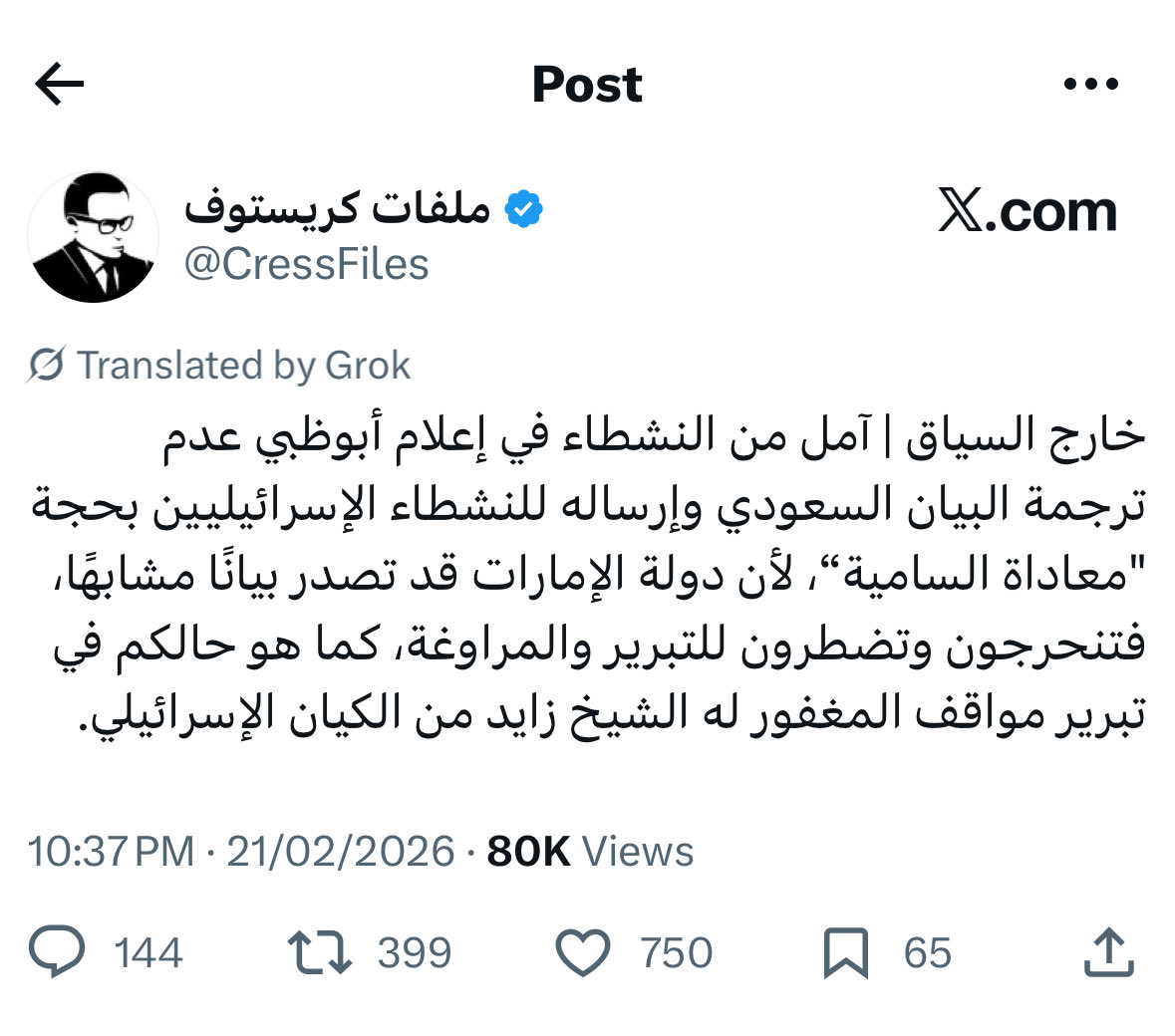
وصل مغردو الإمارات 🇦🇪 إلى مرحلة من الغباء تجعل المرء يقف عاجزاً أمامها…
لم يعد المغرد الإماراتي 🇦🇪 قادراً على التفريق بين خطاب معادٍ للسامية، الذي يحاول بإصرار إلصاقه بالسعودية 🇸🇦 بلا جدوى،
وبين بيان يرد على خطاب توسعي يبرّر التوسع والاحتلال من خلال استغلال النصوص الدينية والتفسيرات المتطرفة لها…‼️
الغريب أن هؤلاء المغردين في كل مرة يحاولون فيها توظيف أي شيء وكل شيء ضد السعودية 🇸🇦، تتلقاهم اللطمات والركلات من مؤسساتهم نفسها…
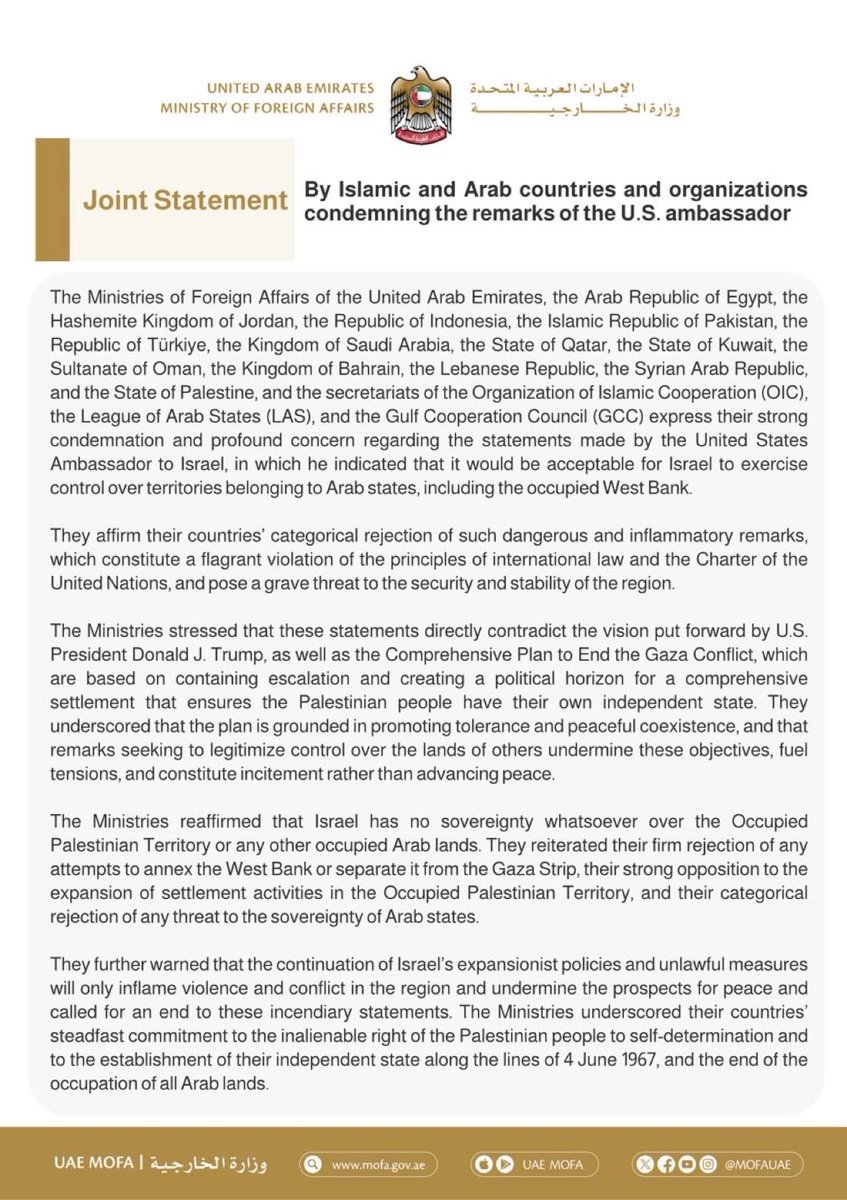
فقد أصدرت وزاره الخارجية الإماراتيه 🇦🇪 نفس البيان والاعتراضات على تصريحات مارك هاكابي التي اتهمونا فيها بمعاداة السامية‼️
ملاحظتي:
مستوى الأداء والتشغيل للجان الإماراتية 🇦🇪 وتوابعها من المرتزقة والمأجورين مخيب للآمال بشكل واضح،
ويفتقر للاحترافية والمهنية والتناسق في الطرح…

When some #Saudi accounts urge people not to share or translate a particular statement into English because it could be seen as antisemitic, the issue is no longer about language. It is about the message itself.
If the statement contains antisemitic ideas, then the real problem is not who reads it. The problem is that such ideas were expressed in the first place.
And this is where the contradiction becomes clear.
Why does #antisemitic rhetoric appear comfortably in Arabic, yet suddenly disappear in English?
Why is hostility voiced boldly for one audience, but carefully softened or concealed for another?
If the position is principled, it should not depend on translation.
If it changes with language, then it is not principle. It is calculation.
Antisemitism is not a political flavor you adjust by audience. In many parts of the world, it is treated as a serious offense because it targets people for who they are.
So this is not about translation at all.
It is about whether you are willing to own your words everywhere, or only where you feel safe.
3
5
484
محمد فخرو retweeted
بيان صادر عن وزارة الخارجية
السبت 21 فبراير 2026
تعرب وزارة الخارجية عن إدانة دولة الكويت واستنكارها الشديدين للتصريحات غير المسؤولة الصادرة عن سفير الولايات المتحدة الأمريكية لدى حكومة الاحتلال الإسرائيلي، والتي تضمنت قبول سيطرة الاحتلال على أراضٍ تعود لدول عربية، بما في ذلك الضفة الغربية المحتلة.
وتؤكد الوزارة على رفض دولة الكويت القاطع لمثل هذه التصريحات، لما تمثله من مخالفة واضحة لمبادئ القانون الدولي وقرارات الشرعية الدولية بما فيها القرار رقم 2803، ولما تنطوي عليه من مساس بسيادة الدول ووحدة أراضيها، الأمر الذي من شأنه زيادة حدة التوتر وتقويض جهود تحقيق الأمن والاستقرار في المنطقة.
كما تشدد دولة الكويت على أن هذه التصريحات تتعارض بشكل مباشر مع الرؤية التي طرحها الرئيس الأمريكي دونالد ج. ترامب، وكذلك مع النقاط العشرين ذات الصلة بالسعي إلى تحقيق السلام، مؤكدة على أن أي طرح يضفي شرعية على السيطرة على أراضي الغير يقوض تلك المساعي ويؤجج الأوضاع.
وتجدد دولة الكويت تأكيدها على أن القوة القائمة بالاحتلال لا تملك أي سيادة على الأراضي الفلسطينية المحتلة أو على أي أراضٍ عربية أخرى، وترفض أي محاولات لضم الضفة الغربية أو فصلها عن قطاع غزة، كما تعارض استمرار الأنشطة الاستيطانية في الأرض الفلسطينية المحتلة.
وتؤكد دولة الكويت التزامها الثابت بدعم الحق غير القابل للتصرف للشعب الفلسطيني في تقرير مصيره، وإقامة دولته المستقلة على حدود الرابع من يونيو 1967 وعاصمتها القدس الشرقية، استناداً إلى قرارات الشرعية الدولية ومبادرة السلام العربية، وبما يحقق السلام العادل والشامل في المنطقة.
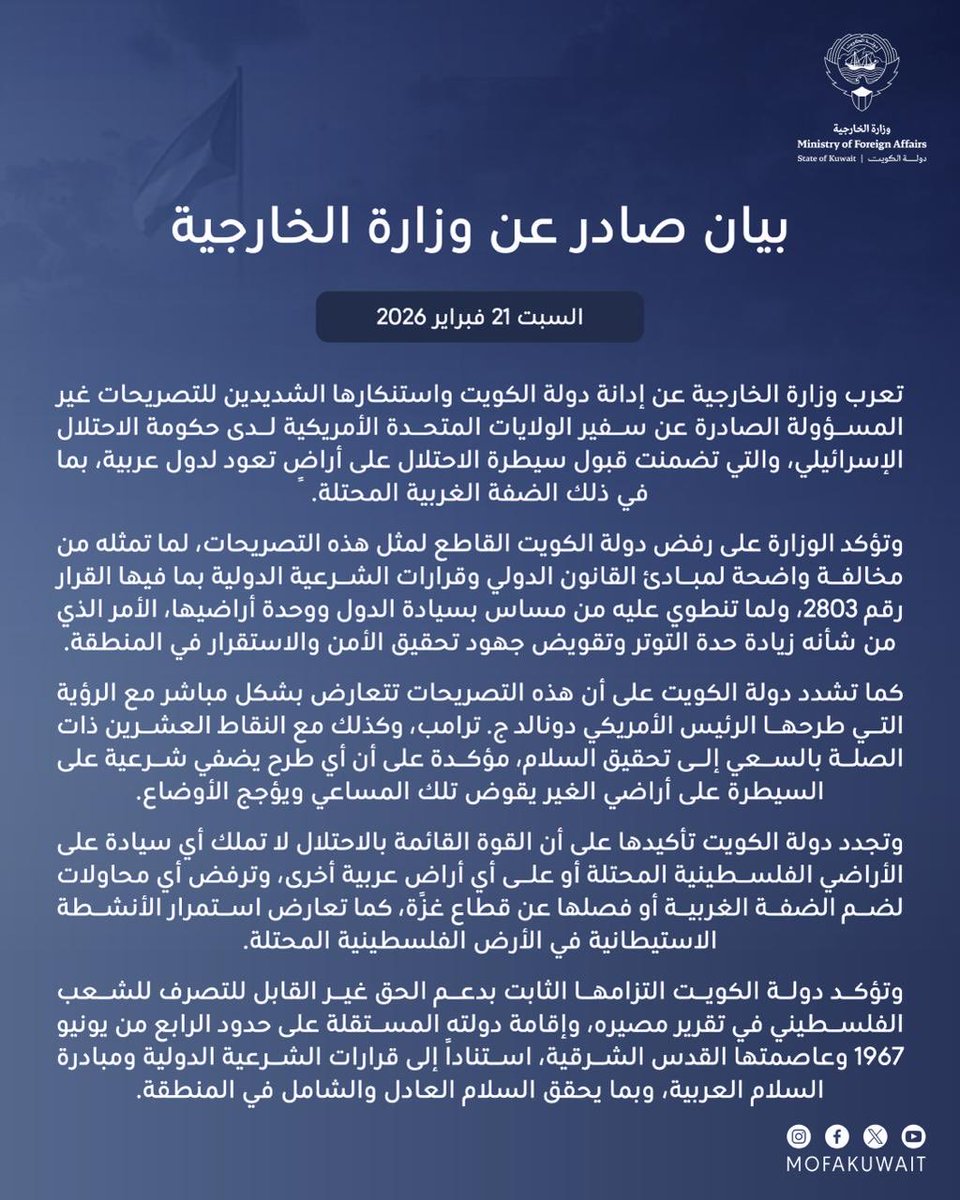
584
1,559
243,012
Ali retweeted

ڈاکٹر طاہرالقادری کا 2010 کا فتوی ایک اہم موڑ ثابت ہوا، اس نے انتہا پسندی اور شدت پسندی کے نظریاتی جواز کو چیلنج کیا اور زیادہ پُر امن کہانی بیان کرنے کی راہ ہموار کی۔
@TahirulQadri
#ShaykhUlIslamAt75
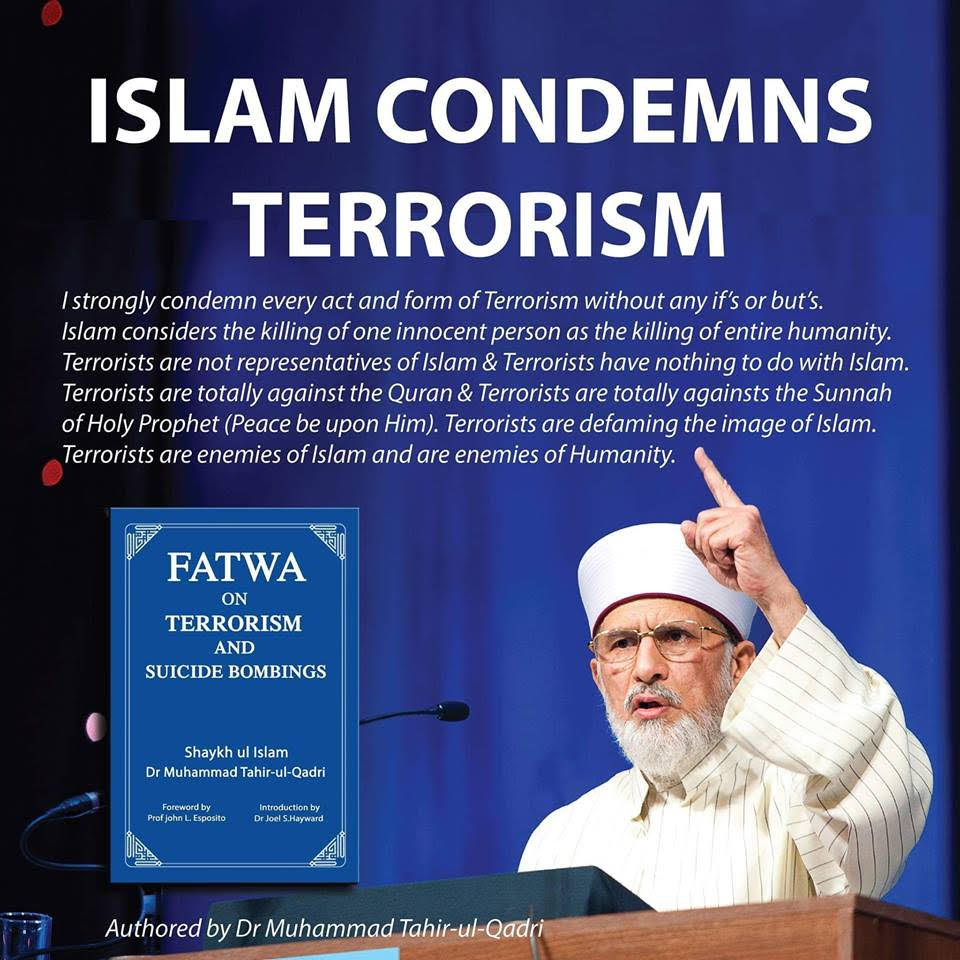
18
14
41
#يحيى_جابر retweeted

ندد بيان عربي إسلامي مشترك، السبت، بالتصريحات التي أدلى بها السفير الأميركي لدى إسرائيل مايك هاكابي حول السيطرة على أراض تعود لدول عربية بما فيها الضفة الغربية.
وقال البيان، الذي نشرته وزارة الخارجية السعودية، على منصة إكس: "تعرب وزارات خارجية كل من السعودية، والأردن، والإمارات، وقطر، وإندونيسيا، وباكستان، ومصر، وتركيا، وسوريا، وفلسطين، والكويت،ولبنان، وعُمان، والبحرين، وأمانات مجلس التعاون لدول الخليج العربية، وجامعة الدول العربية، ومنظمة التعاون الإسلامي، عن إدانتها الشديدة وقلقها البالغ إزاء تصريحات السفير الأميركي لدى إسرائيل، والتي أشار فيها بقبول ممارسة إسرائيل سيطرتها على أراضٍ تعود لدول عربية، بما في ذلك الضفة الغربية المحتلة".
وأكد البيان الرفض القاطع لمثل هذه التصريحات "الخطيرة والاستفزازية"، وقال إنها تمثل انتهاكا صارخا لمبادئ القانون الدولي وميثاق الأمم المتحدة وتهديد جسيم لأمن المنطقة واستقرارها.
وشدد البيان العربي الإسلامي المشترك على أن تصريحات السفير الأميركي تتعارض مع الرؤية التي طرحها الرئيس دونالد ترمب والخطة الشاملة لإنهاء الحرب في قطاع غزة.
وقال البيان إن أي تصريحات تسعى لإضفاء الشرعية على ضم أراضي الغير تؤجج التوتر وتقوض جهود السلام، مشددا على أنه لا سيادة لإسرائيل على الأرض الفلسطينية المحتلة أو أي أراضٍ عربية محتلة أخرى.
وأعربت الدول الموقعة على البيان عن رفضها التام لأي محاولات لضم الضفة الغربية أو فصلها عن قطاع غزة، وقالت "نعارض بشدة توسيع الأنشطة الاستيطانية في الأراضي الفلسطينية المحتلة، ونرفض أي تهديد لسيادة الدول العربية وندعو لوضع حد لهذه التصريحات التحريضية".
وحذرت هذه الدول في البيان المشترك من أن استمرار السياسات التوسعية والإجراءات غير القانونية التي تنتهجها إسرائيل لن تؤدي إلا إلى إشعال مزيد من العنف والصراع في المنطقة وتقويض فرص السلام.

5
5
909
Salman retweeted

علی امین گنڈاپور کیخلاف کارروائی کی باتیں من گھڑت ہیں, علی امین سےگزارش کی ہے کہ پارٹی اندرونی اختلافات کی متحمل نہیں ہو سکتی، علی امین گنڈاپور نے ویڈیو بیان میں معذرت کرکے بڑے پن کا مظاہرہ کیا، بیرسٹر گوہر
1
1
15
162
Ruqia khan retweeted

عظمی بخاری اور یونیورسٹی آف کیمبرج سے پڑھے اس بیوروکریٹ کے بیان میں آپکو کوئی فرق نظر آرہا ہے؟
سرکاری ملازمین شریف خاندان اور زرداری خاندان کے ذاتی وفادار کیسے بن جاتے ہیں؟ ان دو خاندانوں کے پاس آخر کونسا شہد یا گُڑ ہے یا گیدڑ سنگھی ہے؟

جہاز ایئر پنجاب کا ہو یا پنجاب گورنمنٹ کا ۔۔۔ جہاز حکومت پنجاب کا ہی اثاثہ ہو گا ۔ اور اس کا استعمال بھی حکومت پنجاب کی منظوری سے ہی ہو گا ۔ وزیر اعلیٰ سندھ اور بلوچستان جب اسلام آباد آتے ہیں تو اپنی حکومتوں کے جہازوں پر ہی آتے ہیں ۔ خیبر پختونخوا حکومت کے پاس بھی دو ہیلی کاپٹر ہیں ۔ پنجاب واحد صوبہ جس پر کوئ قرضہ نہیں ۔ ہر طرح کے فلاحی اور ترقیاتی کام ہو رہے ہیں ۔ جہاز کی ضرورت ہے تو لیا گیا ہے ۔ 5000 ارب روپے سالانہ بجٹ والا صوبہ اور دنیا کے شاید ایک درجن ملکوں سے ہی چھوٹا ہو گا ۔ نہ وزیر اعلیٰ نے یہ جہاز ساتھ لے جانا ہے نہ ہی یہ ذاتی استعمال کیلئے ہے ۔ کارکردگی پر بات اور مقابلہ کرنا اور بات ہے ۔
9
61
288
2,965
محمد فخرو retweeted
بيان صادر عن وزارة الخارجية
السبت 21 فبراير 2026
في ضوء قيام جمهورية العراق بإيداع قائمة احداثيات وخارطة لدى الأمم المتحدة، تتضمن ادعاءات حول المجالات البحرية العراقية، وبالاشارة لما تضمنته تلك الاحداثيات والخارطة من مساس بسيادة دولة الكويت على مناطقها البحرية ومرتفعاتها المائية الثابتة والمستقرة بالعلاقة مع جمهورية العراق، مثل فشت القيد وفشت العيج، التي لم تكن محلاً لأي خلاف حول سيادة دولة الكويت التامة عليها.
استدعت وزارة الخارجية، ممثلةً بسعادة السفير عزيز رحيم الديحاني، نائب وزير الخارجية بالوكالة، سعادة د. زيد عباس شنشول، القائم بأعمال سفارة جمهورية العراق لدى دولة الكويت، لتسليمه مذكرة احتجاج رسمية على ما تضمنته الإدعاءات العراقية المودعة لدى الأمم المتحدة من مساس بسيادة دولة الكويت على مناطقها البحرية، والمرتفعات المائية التابعة لها.
وتدعو وزارة خارجية دولة الكويت، جمهورية العراق الى الأخذ بعين الاعتبار مسار العلاقات التاريخية بين البلدين الشقيقين وشعبيهما، والتعامل الجاد والمسؤول وفقاً لقواعد ومبادئ القانون الدولي، وما نصت عليه اتفاقية الأمم المتحدة لقانون البحار لعام 1982، وبما يتوافق مع التفاهمات والاتفاقيات، ومذكرات التفاهم الثنائية المبرمة بين البلدين.

306
705
253,535
عبدالعزيز الغامدي retweeted

🚨 عااااااجل | بيان سعودي شديد اللهجة:
المملكة العربية السعودية تدين بأشد العبارات وتستنكر كليًا ما تضمنته تصريحات السفير الامريكي لدى إسرائيل التي عبّر فيها باستهتار بأن سيطرة إسرائيل على الشرق الأوسط بأكمله سيكون أمرًا مقبولًا .
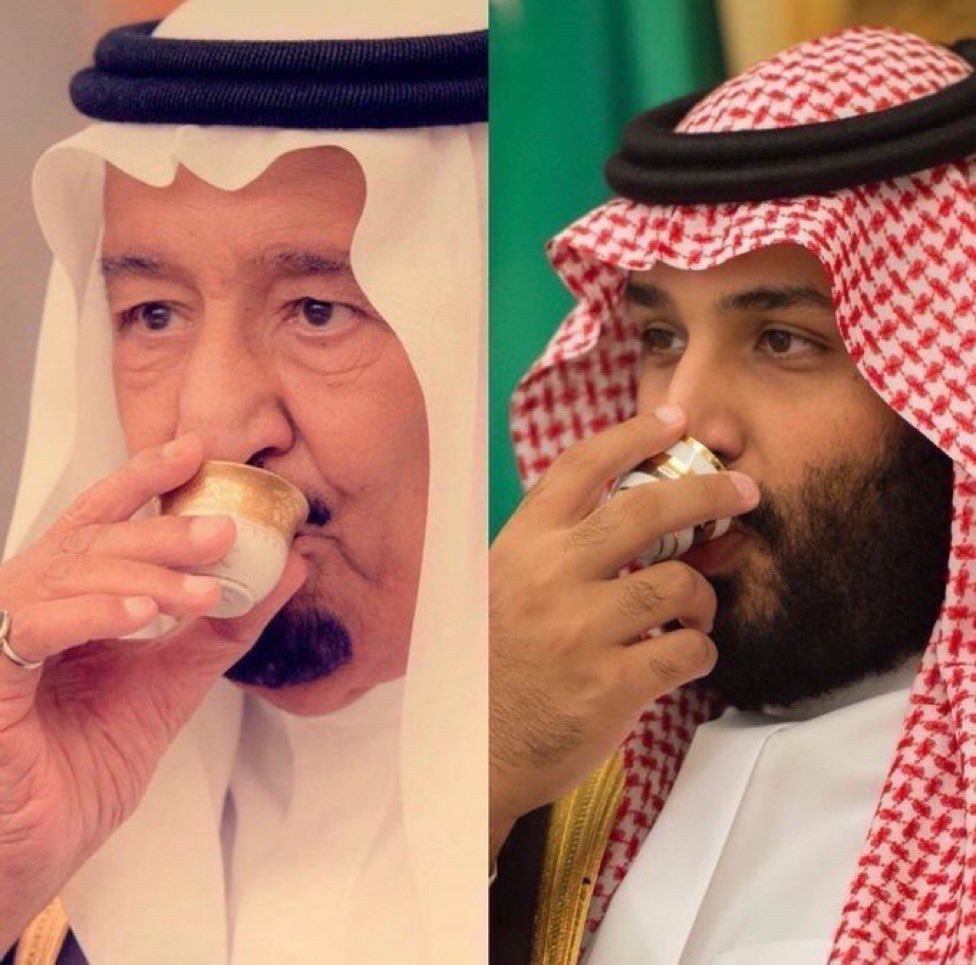
250
676
1,892
83,323


HMD retweeted

بيان مشترك لدول ومنظمات إسلامية وعربية تُدين تصريحات السفير الأمريكي
mofa.gov.ae/ar-ae/mediahub/n…
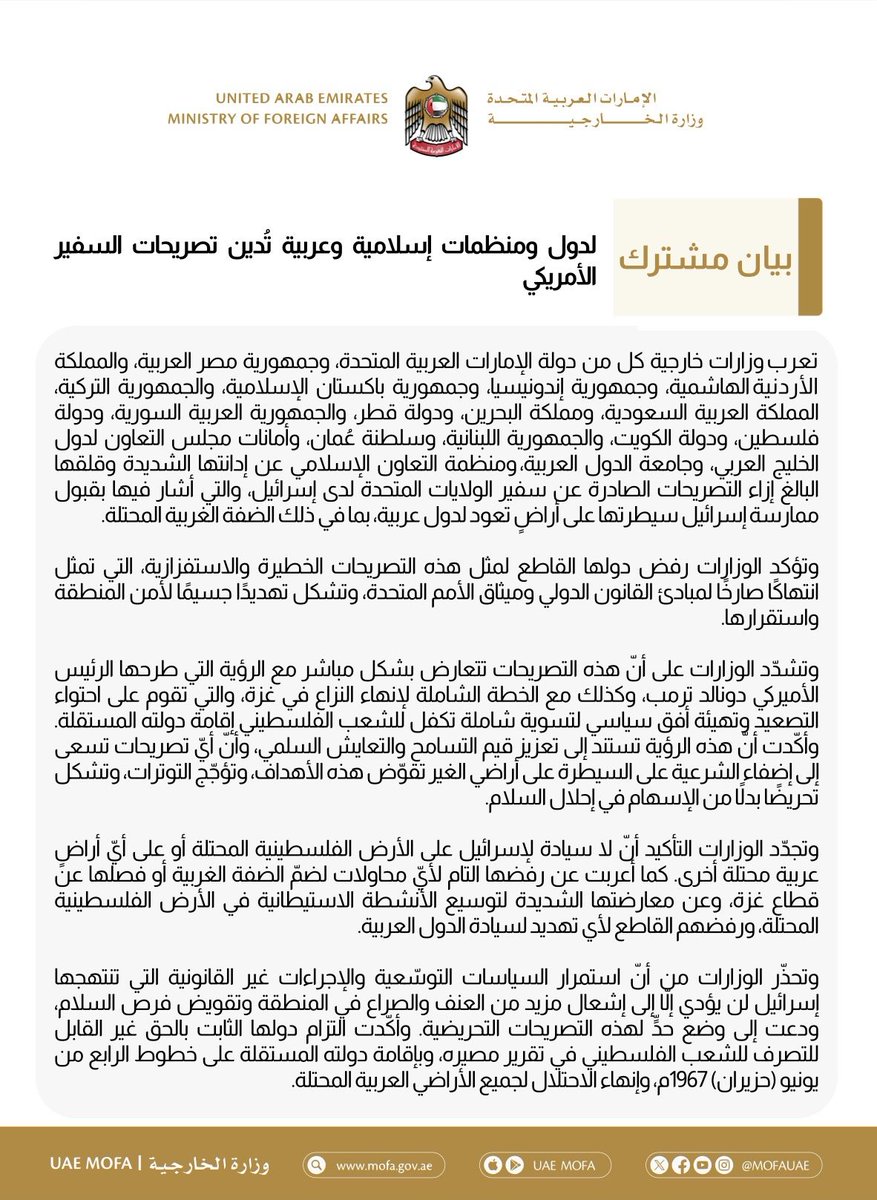
1
192
588
1,038,272
عبدالعزيز الغامدي retweeted

#بيان | تعرب وزارات خارجية كل من السعودية، والأردن، والإمارات، وقطر، وإندونيسيا، وباكستان، ومصر، وتركيا، وسوريا، وفلسطين، والكويت،ولبنان، وعُمان، والبحرين، وأمانات مجلس التعاون لدول الخليج العربية، وجامعة الدول العربية، ومنظمة التعاون الإسلامي، عن إدانتها الشديدة وقلقها البالغ إزاء التصريحات الصادرة عن سفير الولايات المتحدة لدى إسرائيل، والتي أشار فيها بقبول ممارسة إسرائيل سيطرتها على أراضٍ تعود لدول عربية، بما في ذلك الضفة الغربية المحتلة.

486
3,091
8,463
991,117
