
Proud MAGA🇺🇲🇺🇲🇺🇲 God, Country, Family, Pets. Honor our Troops, Constitution as written. Married. 🚫NO DM'S I'll block you. #PatriotWarriors WHITE ROSE🤍
Joined February 2013
- Tweets 28,313
- Following 8,040
- Followers 18,366
- Likes 21,842
4,290 Photos and videos






Pinned Tweet

Feb 19
The man asked for a dish like in a restaurant 🤣😂😂😂
7
29
28
2,052
DontTrySass😇 retweeted
Let’s help solve the debate presented in this quoted tweet…
I.
The genetic evidence surrounding Neanderthals provides a compelling case against the standard evolutionary narrative of human origins. Modern humans and Neanderthals share approximately 99.7% of their DNA sequence, a level of similarity far greater than the roughly 98–99% often cited between humans and chimpanzees…yet no one classifies chimpanzees as a mere variant of humanity. This near-identity indicates that Neanderthals were not some distant, transitional “ape-man” species on an evolutionary ladder, but rather fully human populations exhibiting natural variation within the same created kind.
As mentioned in the quoted post a striking skeletal distinction further illustrates this point…unlike Neanderthals, whose mandibles lack a protruding chin (a receding or sloping symphysis), Homo sapiens uniquely possesses a prominent, forward-projecting chin…a bony mental eminence that emerges during postnatal development. This feature is absent not only in Neanderthals but in all other known hominins and primates, making it a true autapomorphy of modern humans. Evolutionary explanations for the chin often reduce it to a byproduct of facial gracilization (smaller, flatter faces due to reduced prognathism), changes in bone remodeling patterns during ontogeny, or incidental geometric outcomes from shrinking jaws…yet these accounts struggle to identify a clear selective advantage, underscoring how arbitrary such “just-so” stories can be.
The discovery of interbreeding further undermines evolutionary predictions. Non-African populations today carry 1–4% Neanderthal-derived DNA (with traces in some African groups from later migrations), resulting from gene flow that occurred after modern humans dispersed from their point of origin. Evolutionary models initially anticipated that Neanderthals represented a separate lineage too divergent for successful reproduction with Homo sapiens, yet genomic data revealed fertile interbreeding and even adaptive benefits from certain introgressed alleles (e.g., immune-related genes). Rather than supporting gradual divergence over hundreds of thousands of years, this pattern aligns more readily with a recent, shared ancestry followed by rapid post-dispersal diversification…consistent with a historical model of human unity descending from a common source, with subsequent regional adaptations.
Physical traits once labeled “primitive” in Neanderthals…such as robust skeletal structure, prominent brow ridges, larger nasal cavities, and forward-projecting midfaces…have been reevaluated in light of developmental biology, pathology, environmental influences, and even potential effects of longevity or nutritional factors in some specimens. Archaeological evidence demonstrates Neanderthal behavioral modernity…ritual burial, complex tool manufacture, symbolic art, and social organization indistinguishable in kind from early modern humans. These are hallmarks of fully human cognition, not evolutionary intermediates.
*conclusion in first comment

Feb 20

Biologists have debated the reason why Homo sapiens evolved a prominent lower jaw, but this unique feature may actually be a by-product of other traits shaped by natural selection newscientist.com/article/251…
5
35
25
1,507
DontTrySass😇 retweeted
Feb 19
The man asked for a dish like in a restaurant 🤣😂😂😂
7
29
28
2,052
DontTrySass😇 retweeted

🫣😒🤦😂🤣😭 Thank you Sis for the fantastic ride ❤️ Sorry I'm so late 😔 Honored to be with such great Patriots. Everyone please ➡️ @courage04ever ⬅️ A most beautiful Patriot and friend who works so tirelessly to bring us Patriots together ❤️❤️🇺🇲🇺🇸🇺🇸🇺🇲
1
1
2
30
DontTrySass😇 retweeted

AMERICAN DREAMTEAM 🇺🇲
@tooosunny
@marijotrue
@angelwoman501
@Outs45
@kimmagagal2
@Lisa_Matassa
@LissaForTrump
@DanelleTyler2
@wildangel1968
@ZeroDarkKitty
@WTFoxtrot10
@WhalenMona
@SusanKi777
@dena928588
@lah3309
@Lisahudsonchow7
@candace_lo70387
@Jes3CAgrl4Life1
@peaceful3023
@DonnaRaine2022
@Tackle71Wall
@Loveof1776
@EndaRet25
@BitchKitten8
@courage04ever
@BrendaL59758
@end3of6days9
@trump_one
@1109Patricia
@SirFlyzalot
@AndraCastilho3
@NolaCookPatriot
@NancyMar2025
@theREALhunt24
@603jeepgirl
@BeeAwake1
@bdonesem
@RighterThanRigh
@WhalenMona
@Thevictoria76
@CoopandKCmom
@Amy95474055
@misti_jacoby
@_LadyRiley
@MisatoPatriot01
@V_Lady2024
8
14
14
387
DontTrySass😇 retweeted

Feb 20
🚂Penny866🚃
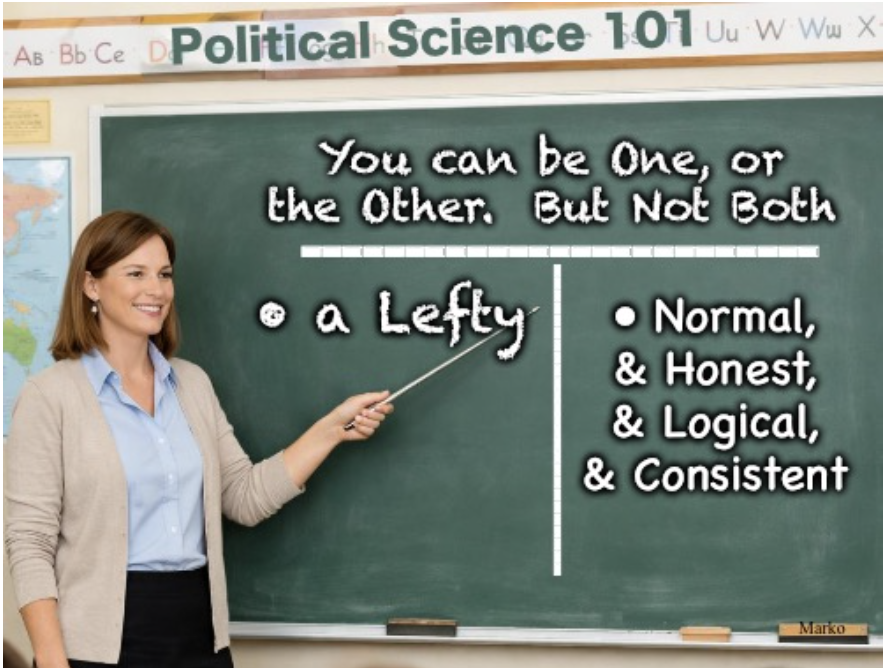
Political Science 101..
@1NJConservative
@TheGrayRider
@marijotrue
@Para_Bellum666
@PecanC8
@MagaSicilian
@Bluepit19651
@marcbrivas43
@KeysLiisa
@Dretchy
@DoraDallas6
@AlaskaPatriot1
@jackiek866
@Outs45
@WildHeartoO
@cecegkh
@Wil__liW
@JimPidd
@courage04ever
93
98
131
1,938
DontTrySass😇 retweeted

Feb 20
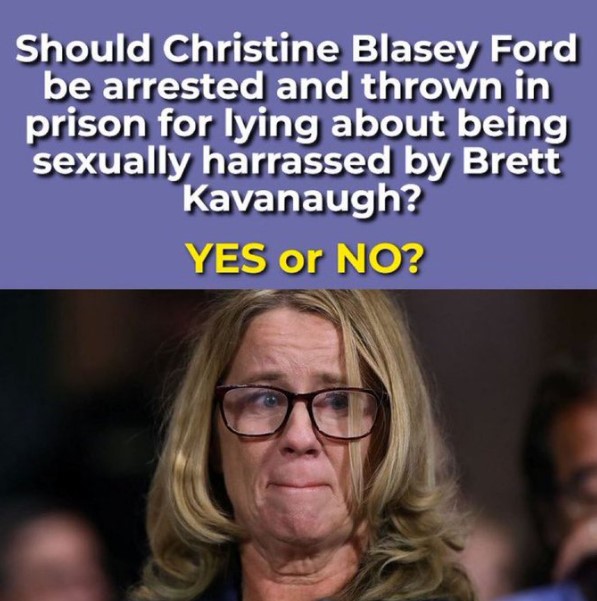
She LIED, and everyone knows it!!!!!
@Blueverse01👈👈👈
@candace_lo70387
@tooosunny
@WhalenMona
@PecanC8
@Zegdie
@tutukane
@MAC_ARMY1
@sep16000
@laura_7771
@GigaBeers
@hellzxcajun
@NathanielSami
@PSwal807
@ItsEthanRay
@Ilegvm
@x4Eileen
@RockyMtMama1
@mother_tx
@827js
@NancyMar2025
@Jessies_Too
@operater404
@Eb67735B
@_uwomy
@ReckoningRiser
@Rammie24
@MarcelaErcia
@courage04ever
@TrumpGirl1971
@Outs45
@ToniLL22
@LadyJoAnn9
@Bagel69er
51
68
128
1,790

DontTrySass😇 retweeted

Feb 19
1
1
1
24
DontTrySass😇 retweeted

Feb 20
🤣🤣🤣🤣that s what you call a small plate dinner
1
1
1
22

DontTrySass😇 retweeted

Feb 19
1
7
6
99
DontTrySass😇 retweeted

Feb 19
1
7
5
99


DontTrySass😇 retweeted
Feb 19
I’m late ! So sorry Sweet Nancy ! I hope you had a great day!
1
1
1
19
DontTrySass😇 retweeted

Feb 19
🕊️ Trump is the peace President 🕊️
23
714
1,286
14,054
DontTrySass😇 retweeted
Feb 19
The left has a political violence problem…
48
321
405
9,338