
Joined February 2024
- Tweets 111,005
- Following 1,447
- Followers 76,989
- Likes 97,554
Photos and videos

Jan 29
SHARE THIS to make sure Lexie is
NEVER allowed to be a nurse again.!!!
0
8
0
10

Jan 29
This guy layers all FIVE Beach Boys vocal parts perfectly across multiple verses — unreal range, unreal harmonies 😮🎤✨
So good he was invited to sing with the actual Beach Boys.
If you’re a BB fan, this is straight-up harmony heaven.
Who else has this on repeat? 🏖️🎶
0
0
0
39
Jan 29
President Trump & Nicki Minaj surprise auto workers in the Oval.!!!
2
28
0
43
Jan 29
For years, Gavin Newsom was treated as inevitable.
The next president.
👉 Then The Atlantic reviewed his record and called it something else: “a buffet of vulnerability.”
Here’s what they highlighted.
Prostitution was decriminalized, followed by a rise in underage prostitution cases in Los Angeles.
CRT was incorporated into education policy as math scores declined statewide.
Homelessness increased by roughly 20%.
Policies allowed boys to compete in girls’ sports.
Border enforcement was weakened.
Gas-powered vehicle sales were restricted while California gas prices climbed near the highest in the country.
The state funded sex-change surgeries for death-row inmates.
Healthcare benefits expanded to undocumented immigrants.
Home prices approached $1 million, while housing construction stalled.
This wasn’t opposition research.
It was The Atlantic assessing his governing record.
The more people look at it, the less “inevitable” it seems.
Who else is actually excited to see him actually run? 🤣👇
4
0
0
170
Jan 29
I guess Greg’s got a little something to say here.
Jan 28, 2026 · 10:23 PM UTC

🚨Greg Gutfeld just WENT NUCLEAR on Jessica Tarlov!
“I’m back to correct the record that people need to hear! I don’t care about this performance any more, Jessica. It’s done. If you want to cry about murderers and rapists do it on your own time!”
“I’m back to correct the record that people need to hear! I don’t care about this performance any more, Jessica. It’s done. If you want to cry about murderers and rapists do it on your own time!”
0
0
0
24
Jan 29
The equity fight is unbiblical
God did not establish the government to make everybody equal. That is impossible.”
When governments try, they don’t create righteousness — they create debt that can never be repaid, and division instead of unity.
“You have a right to life, liberty, and the pursuit of happiness. Not to happiness itself — but to work toward it.” 🙏
“We don’t have a right to eat. The Bible says if any man won’t work, neither shall he eat.” (2 Thess 3:10) 💪
Teach your kids: What you have comes by labor, not by gift. Get a lawnmower, a rake, a burger flipper — earn something. God gave us responsibilities protected by righteous laws.
This equity fight is unbiblical.
— Apostle Tommy Quick
Repost if you agree #BiblicalTruth #PersonalResponsibility
8
0
0
186
Jan 29
Nasra Ahmed (‘bananas and rice’ icon) now in custody 🍚🍌🚔
From word salad presser to real-life twist (assault/resisting charges). Bandaids gone.
She allegedly lied about the attack.
Jail serving bananas and rice? Asking for a friend 🤣
#BananasAndRiceMeme
13
0
0
240
Jan 28
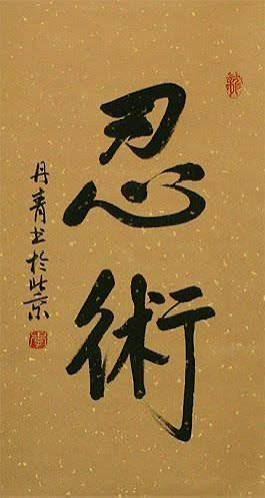
The Brutal Pragmatism of the Shinobi: Why History Isn’t a Movie…
There is a common modern habit of turning the "ninja" into a spiritual superhero or a mystical philosopher. But if you strip away the black fabric and the Hollywood tropes, you are left with something far more interesting…and far more "ugly."
Historically, ninjutsu wasn't a path to enlightenment or a display of warrior prowess. It was a toolbox for survival in a country where "honor" was often a luxury that would only get you killed. If the reality of the shinobi makes you uncomfortable, it’s because it was designed to be effective, not admirable.
The word "ninja" is a relatively modern, external label. In the chaos of feudal Japan, these individuals were shinobi-no-mono…scouts, infiltrators, and information gatherers.
They weren't a separate species or a secret clan of shadow-dwellers. They were often low-ranking soldiers, local villagers, or specialized samurai tasked with a specific mission. They didn't have a "uniform"; their most powerful weapon was looking like everyone else. A "ninja" who looked like a ninja was a failure.
If you open the primary historical manuals like the Bansenshūkai or the Shōninki, you won’t find instructions on how to disappear in a puff of smoke. Instead, you find…
Meteorology…Understanding weather patterns to time an infiltration.
Psychology…
How to exploit human habits and social routines.
Logistics…
The boring, gritty details of gate rotations and supply lines.
In the Sengoku period, information was more valuable than bravery. While the armored samurai fought for glory on the battlefield, the shinobi worked in the margins because castles were hard to break and alliances were easy to fold.
Pop culture really loves the idea of a secret sisterhood of female assassins. The historical reality is far colder. In the manuals, women appear as a method (kunoichi-no-jutsu), not a rank or a costume. This involved utilizing women’s unique social access to spaces where a man…especially an armed one…would be immediately questioned. It was a pragmatic exploitation of social structures, not a superhero origin story.
The gadgets we associate with ninjutsu were never "sacred" weapons. They were expendable solutions to immediate problems…
Kunai…Not a throwing knife, but a heavy-duty pry bar used for digging or climbing that could stab if necessary.
Shuriken…Rarely used for killing; they were "tactical distractions" designed to cause a flinch or a delay during an escape.
Everything a shinobi carried had to justify its weight. If it wasn't helping them get in, get the truth, or get out, it was dead weight.
A key distinction often lost today is that ninjutsu was an operative ethic, not a warrior philosophy. The Shōninki actually warns against enjoying deception. It argues that a shinobi who becomes too attached to the "thrill" of the lie is compromised.
The goal was to be forgettable. The highest achievement in real ninjutsu was to complete a mission so perfectly that no one even knew you were there…leaving behind no story, no legend, and no footprint.
When the wars ended and the Edo period brought stability, the shinobi were largely sidelined. They were useful during the fire, but awkward during the peace. The manuals we have today weren't written to start schools for modern self-improvement; they were written as "deathbed" preservation projects by men who knew their world of pragmatic ugliness was being replaced by a world of romanticized fiction.
Real history is sharper and more ruthless than any movie. Ninjutsu worked because it refused to be pretty.
3
0
0
25
Jan 20
0
2
0
2
Jan 20
Dems are meltdown! The GOP representative handled that perfectly.!!!
4
55
0
56
Jan 20
One year ago! President Donald J. Trump was sworn in as the 45th and 47th President, and everything began to change. American nation is moving forward with renewed purpose, pride, and resolve. History is being written.
THE BEST IS YET TO COME!
1
59
0
70
Jan 20
Thank you, President Trump!
Whole milk is BACK delivering the real healthy fats, protein and essential nutrients kids need to grow strong, smart, and healthy.!!!
2
26
0
33
Jan 20
President Trump reflects on his first year back in the White House.!!!
2
19
0
23