

Gadgets Reseller | Tech Enthusiast
Joined September 2010
- Tweets 1,544
- Following 6,746
- Followers 7,534
- Likes 3,100
123 Photos and videos










Pinned Tweet

4 Jun 2022
22/04/2022, I graduated from the prestigious Ladoke Akintola University Of Technology,Ogbomoso (LAUTECH), department of Electronics & Electrical Engineering, then got inducted into the Nigerian Society of Engineers(NSE)
Now, Olasoko Damilare Adeyemo B.TECH GMNSE



22
44
132


Standstrong retweeted

Feb 10
when this comes to your timeline and you can’t donate, kindly just repost please 🙏


24
14,871
10,457
401,626

Jan 16
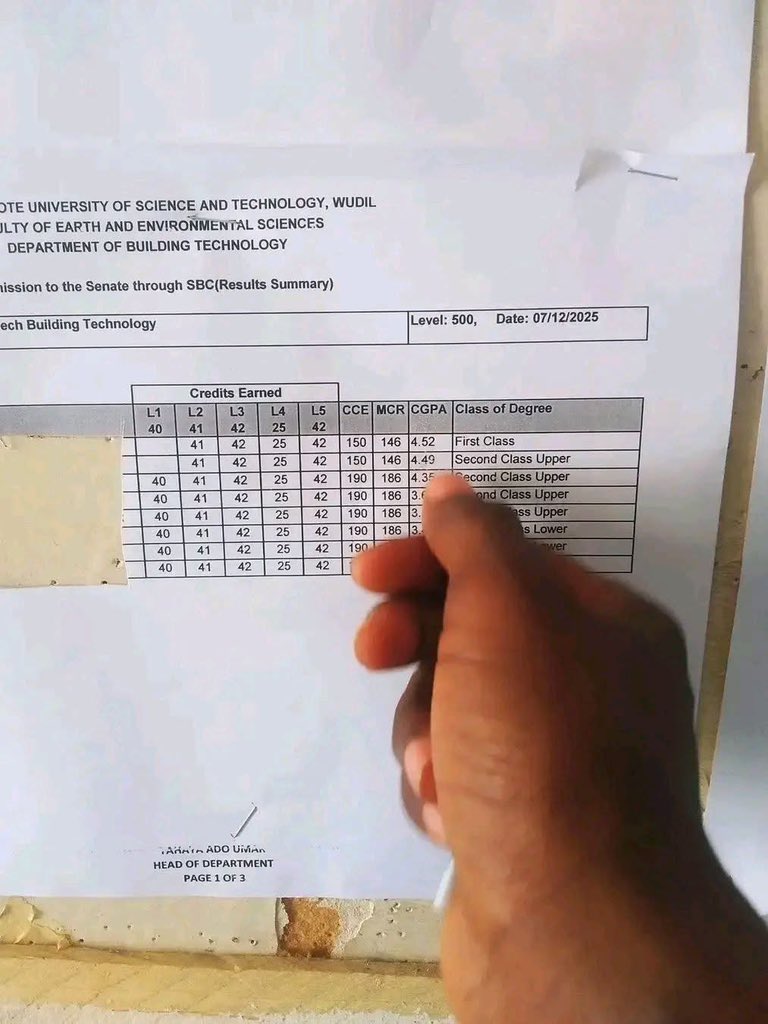
Will keep congratulating till it’s my turn👏🏽

5
114
Standstrong retweeted
Jan 6
How many days can you work here before you receive a sack letter?
3
3
5
137

Standstrong retweeted

Jan 2
Being responsive is one of the easiest hacks to grow faster in your career.
I’ve come to believe that responsiveness alone will put you ahead of a frightening number of people, even when talent, godfathers, credentials, and experience are held constant. Of course, speed is glamorous and people like fast things in most situations. But more importantly, it creates an advantage because most people are slow, distracted, or waiting for the “right time” to engage.
You get an email on Saturday and already know what the response should be. Even if you don’t know, you know what a holding response could look like. But you decide it can wait until Monday, because of boundaries, balance, or some unwritten rule about not looking too eager. Meanwhile, someone else responds in ten minutes, moves the conversation forward, and becomes the default option in the other person’s mind.
Dearest, responsiveness is luck!
I understand the argument for boundaries, and I’m not dismissing it. But if you’re not careful, you end up drawing boundaries not just around your time, but around your career and your growth. Responsiveness is not servitude; it is significant leverage. When you are fast, you are visible, reliable, and top of mind for people who are building, deciding, or moving quickly.
Speed compounds because the faster you respond, the faster conversations close. The faster things close, the more often people come back to you. Over time, you become the person people think of when something needs to get done because you were always present when it mattered.
Of course, speed should be intelligent, not desperate. You have to match energy. If you are consistently fast and the other person is consistently slow, protect your energy and recalibrate. Responsiveness is a two-way street, not a vow of self-sacrifice.
But in a world full of delayed replies, unread messages, and “sorry for the late response,” being fast is a competitive advantage hiding in plain sight. More often than not, speed doesn’t just make you better. It makes you chosen.
8
44
250
21,226
Standstrong retweeted

31 Dec 2025
160 successful flights and 38 esteemed clients later we say thank you for making 2025 a successful business year ❤️✈️
15
68
802
42,121
Standstrong retweeted

11 Dec 2025
Missing child‼️‼️‼️
Please repost aggressively!


49
11,943
7,032
1,775,548
