

"Be a free thinker and don't accept everything you hear as truth.”— Aristotle (RT not endorsement)
Joined January 2023
- Tweets 21,572
- Following 2,014
- Followers 1,798
- Likes 68,796
3,671 Photos and videos


Pinned Tweet

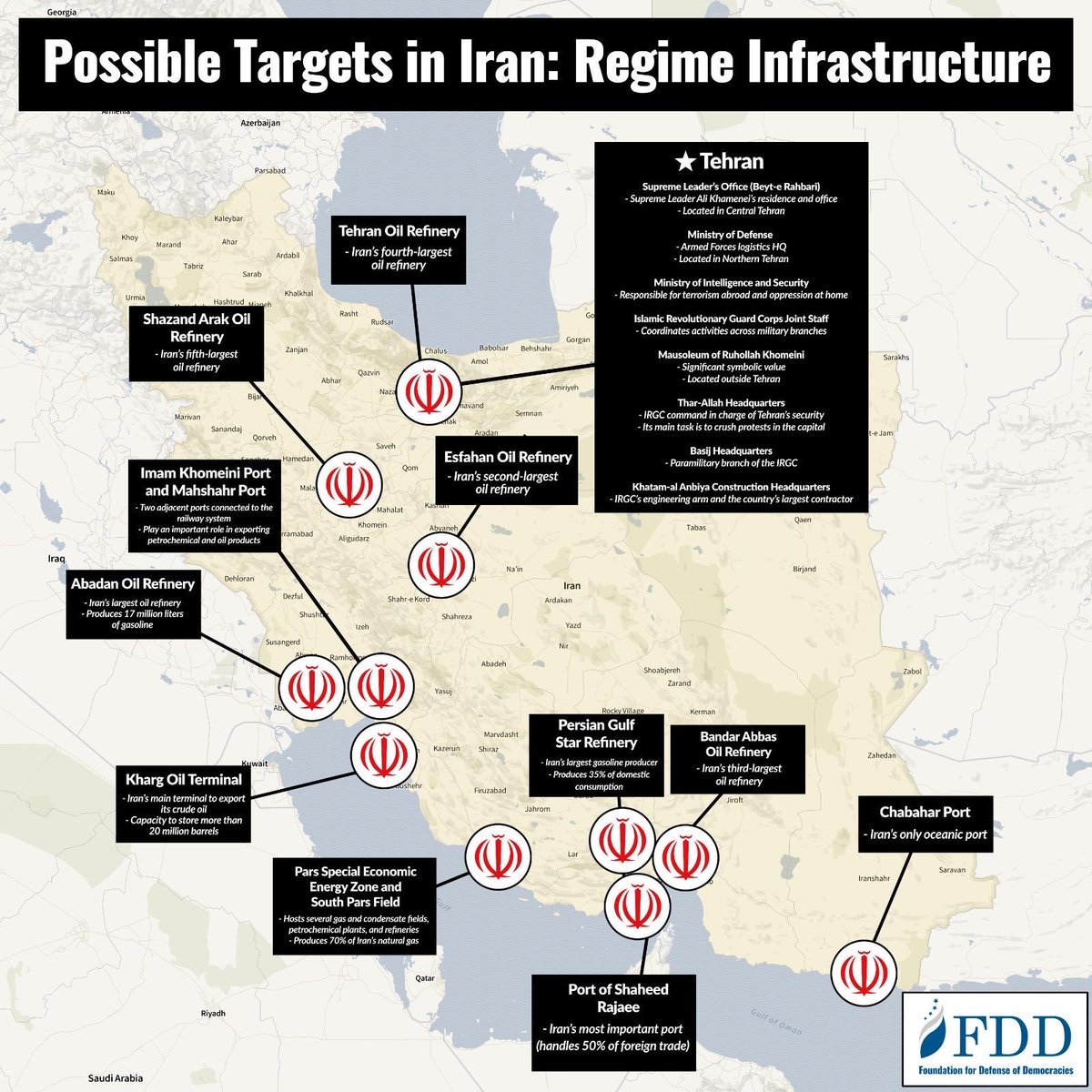
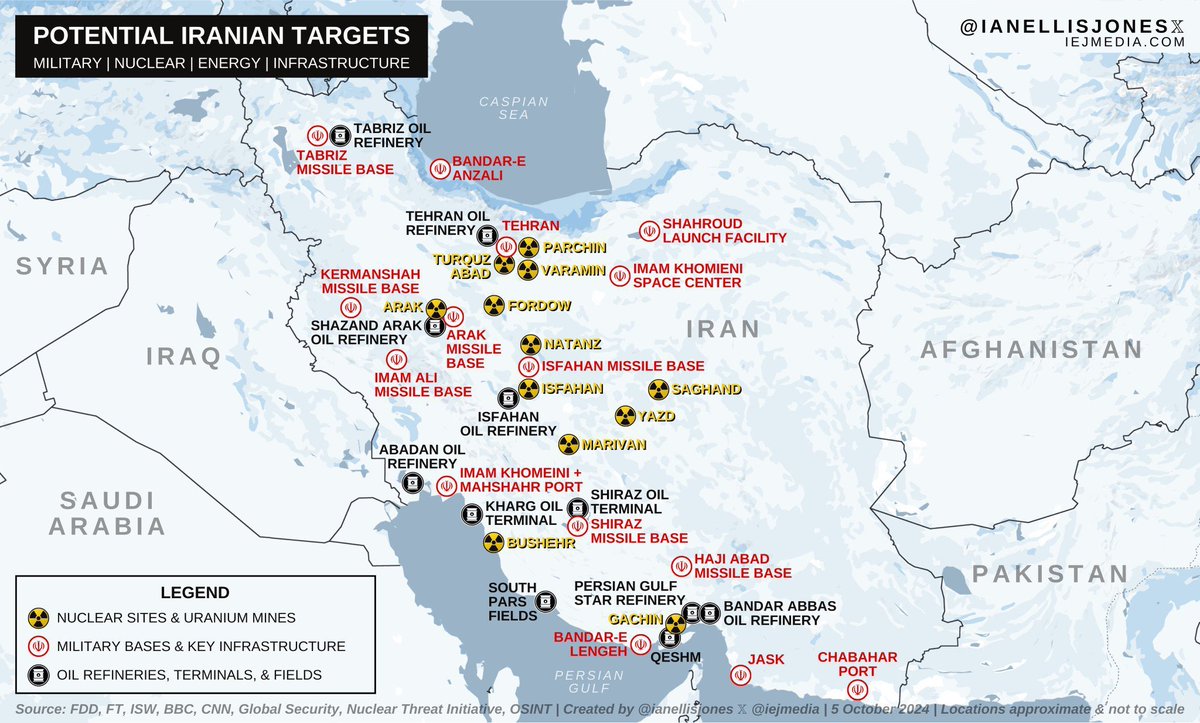
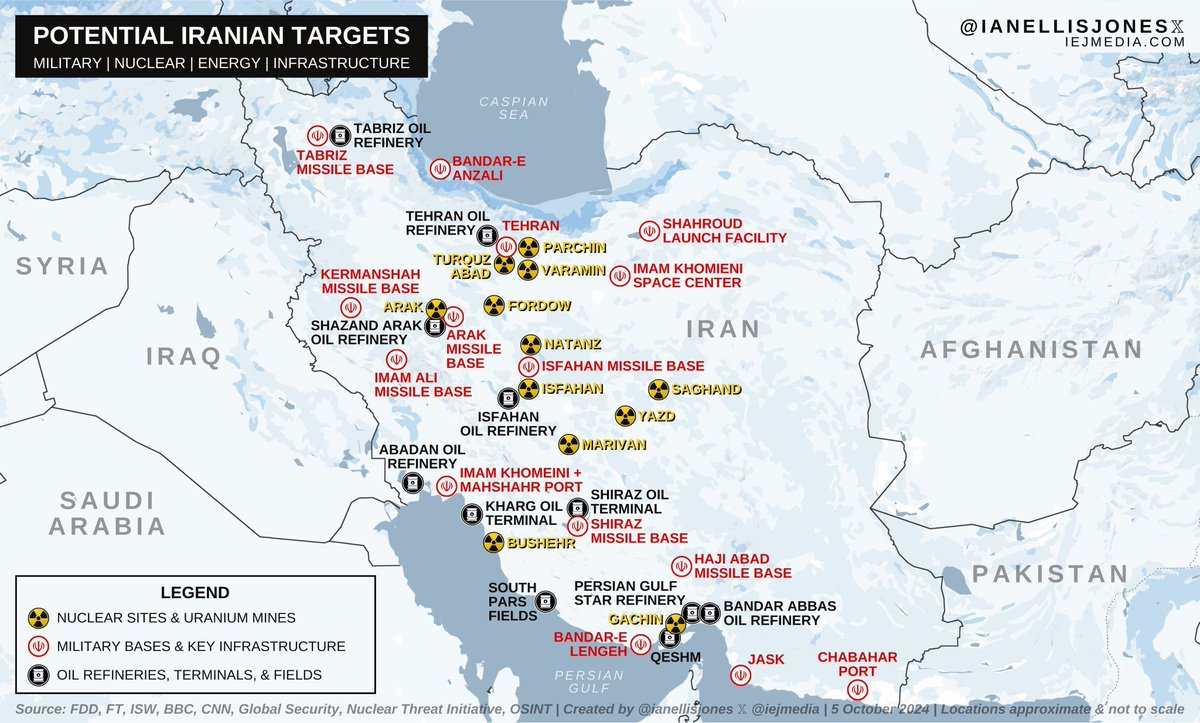
A senior @FDD adviser to Pahlavi is rebranding a US illegal invasion of Iran as “America First”, pitching $1T in oil revenues for US investors while listing Iran’s major refineries as “possible targets”
You can’t bomb a country’s infrastructure and market it as an opportunity!

Overthrowing the Islamist regime in Tehran is America First foreign policy:
1- It removes an enemy that has blood of many Americans on its hands and funds and trains global radical Islamist terrorist movement.
2- It brings down an enemy that constantly challenges US in the region and replaces it with a strategic partner.
3- It finally allows US to reduce its military footprint in the region and focus more on China.
4- It removes an enemy that is a close partner of China in a region that supplies half of China’s imported oil and is a member of the Axis of Aggressors.
5-It opens a market that is closed to US and offers American firms $1 trillion of revenue opportunities over the first decade, that is tens of thousands of well-paying jobs for American workers.
1
10
42
2,247
Caroline Քարոլին کارولین retweeted

“The problem with replacing the regime is the insurgency that comes later.”
They’re telling you very loudly and clearly that their plan is to let some other sucker deal with that problem.

If Trump goes to war with Iran without any mandate, he and his people know it will be wildly unpopular. They’re counting on this being a very short war, filled with best case scenarios. The problem with replacing the regime is the insurgency that comes later. A nation of 93m that has not been at war can carry out an insurgency for decades.
Point being, they don’t care. These are acceptable turn outs for them because they know this is probably their last chance to wage war with Iran. They will not let this moment pass and are counting on you to forget and carry on with the moronic left v right debates, racial strife, all caused by them and their schemes to fill America with chaos. Without mass immigration and a far far left democratic party, we might actually turn our gaze on them.
5
16
589
Caroline Քարոլին کارولین retweeted

Samson Option

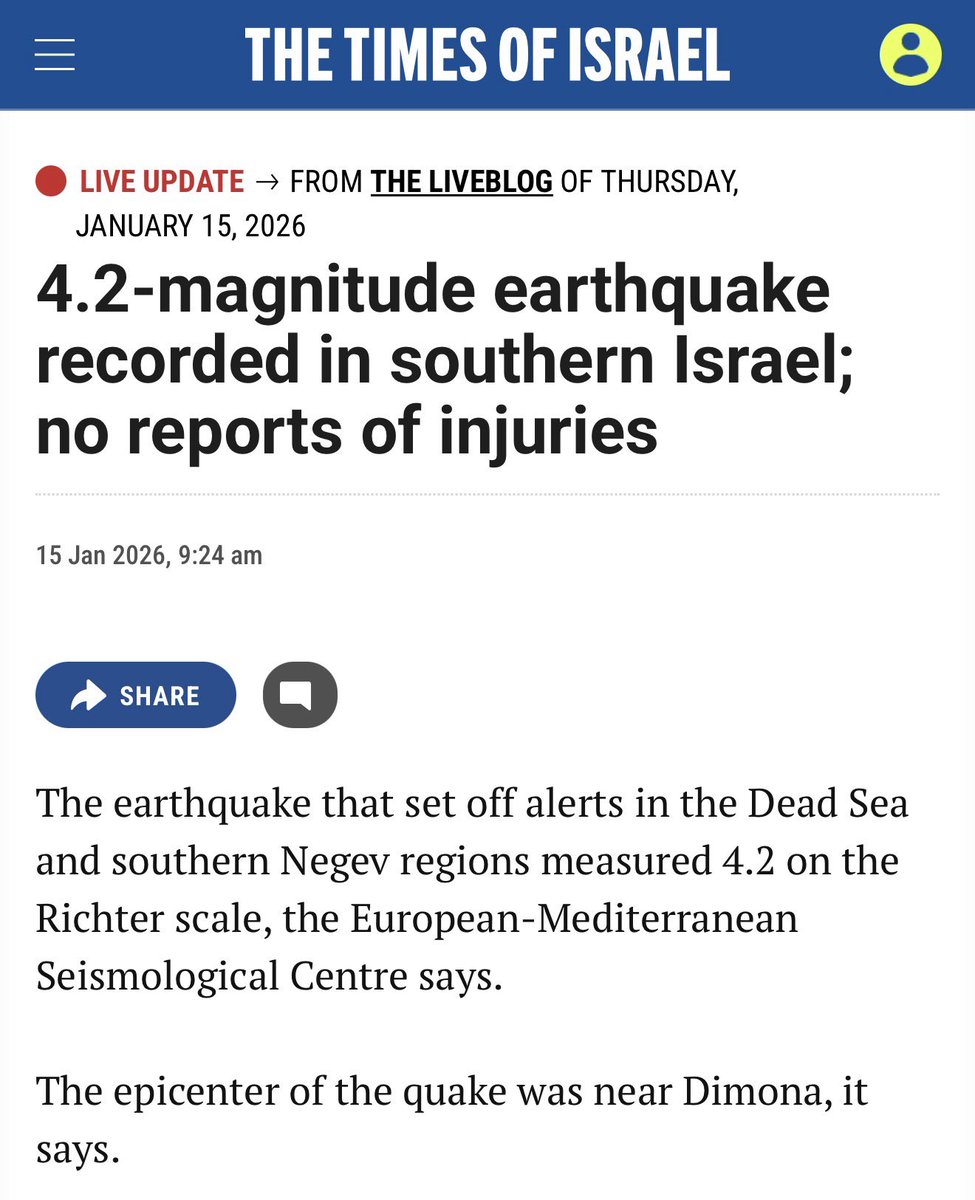
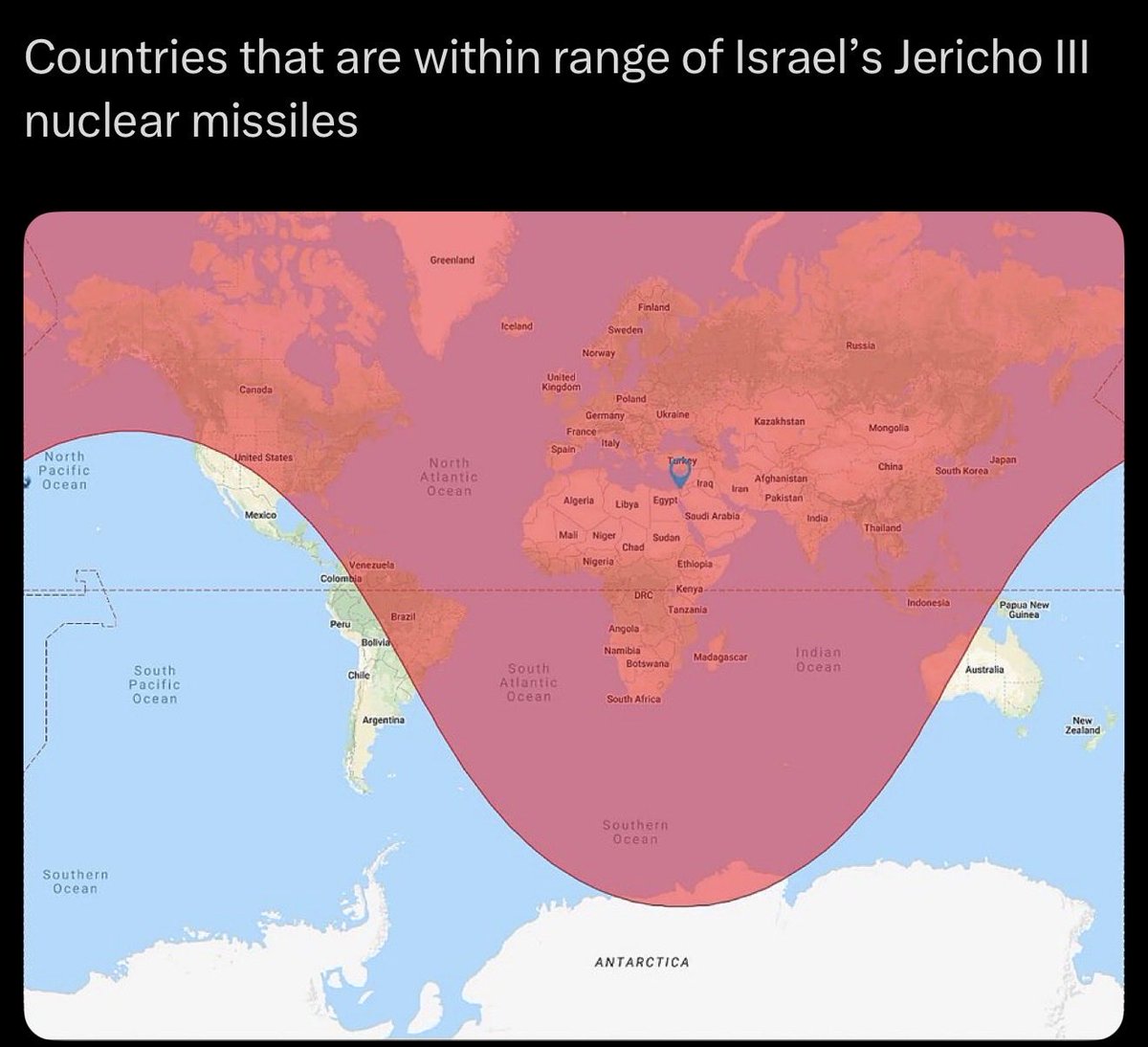
Not enough people are talking about the fact that Israel likely tested a nuclear weapon last month in Dimona and that most of humanity is within range of its Jericho III nuclear missiles
10
173
713
18,476
Caroline Քարոլին کارولین retweeted

A great suggestion:
“A law should be passed requiring every member of Iranian diaspora who supports military action to immediately return to Iran once military hostilities commence.”
I doubt if even 1% of the diaspora would be supportive of military intervention then!

به نظرتان اگر قانونی بود که ایرانیان خارج از کشوری را -که حامی مداخله نظامی هستند- پس از حمله موظف به ترک کشور میزبان و بازگشت به ایران میکرد ( نه حتی حضور در ایران هنگام حمله و گرفتن گوشه کار براندازی) چند درصد همچنان حامی مداخله نظامی بودند؟
1
5
95
Caroline Քարոլին کارولین retweeted

Why are we going to war with Iran again?
Could someone please ask the president?
223
71
580
19,655
Caroline Քարոլին کارولین retweeted

"As long as U.S. policymakers continue to assess Iran primarily through a Western political lens... not fully account[ing] for [🇮🇷s] ideological legitimacy, revolutionary identity, & deterrence psychology then confrontation becomes less a policy choice and more a matter of time."

Everything ultimately comes back to one central issue: successive U.S. administrations have suffered from a deep conceptual gap in how they understand the Iranian regime.
From the outset, many regional experts argued that Tehran operates with clearly defined red lines — particularly regarding regime survival, strategic deterrence capabilities, and regional influence and that it would not abandon those core interests, even at the risk of military confrontation.
Those warnings were often discounted in favor of the assumption that sufficient economic or military pressure would eventually compel capitulation.
Recent developments should make one thing clear: military escalation is unlikely to force Iran into surrender. On the contrary, external threats tend to reinforce the regime’s internal cohesion and validate its long-standing narrative of resistance.
What makes this moment especially unusual is that both sides arguably prefer an agreement over open conflict. Yet negotiations repeatedly fail not necessarily because the objectives are irreconcilable, but because the perceptual gaps and profound mistrust prevent meaningful compromise.
Washington often views Iran through a Western rationalist framework: the belief that escalating pressure inevitably produces pragmatic concessions.
Tehran, however, interprets sustained pressure as proof of structural hostility, reinforcing its determination to resist.
As long as U.S. policymakers continue to assess Iran primarily through a Western political lens — projecting assumptions about cost-benefit calculations that do not fully account for ideological legitimacy, revolutionary identity, and deterrence psychology then confrontation becomes less a policy choice and more a matter of time.
The core issue is not whether pressure works. It is whether U.S. strategy is grounded in an accurate understanding of how this particular regime defines risk, survival, and victory.
2
7
282
Caroline Քարոլին کارولین retweeted

They chanted for Khomeini too.
The outside world mustn’t mechanically elevate whoever appears most amplified in the moment.
The Iranian govt has crushed organic domestic opposition for years. When that space gets hollowed out, figures amplified on social media or satellite networks beamed into Iran inevitably fill the vacuum— as Khomeini once did via radio/tapes in the lead-up to 1979.
That doesn’t mean they reflect a durable or broadly representative political consensus.
Reactionary moments don’t automatically justify rallying behind a specific figure.
Let’s learn from history and not repeat it.

Students chanting "long live the Shah" in Tehran today.
(I personally believe Iranians deserve a more open-minded and inclusive leader than Reza Pahlavi, but there is no denying he has some real popularity on the ground in Iran)
1
6
18
1,879

Witkoff on Iran: The president is curious as to why -- I don’t want to use the word capitulated but why they haven't capitulated. Why under this pressure with the amount of naval power over there, why they haven't come to us and said we profess we don't want a weapon…
240
152
1,014
450,084
I’ve been called many things, today, apparently, a communist
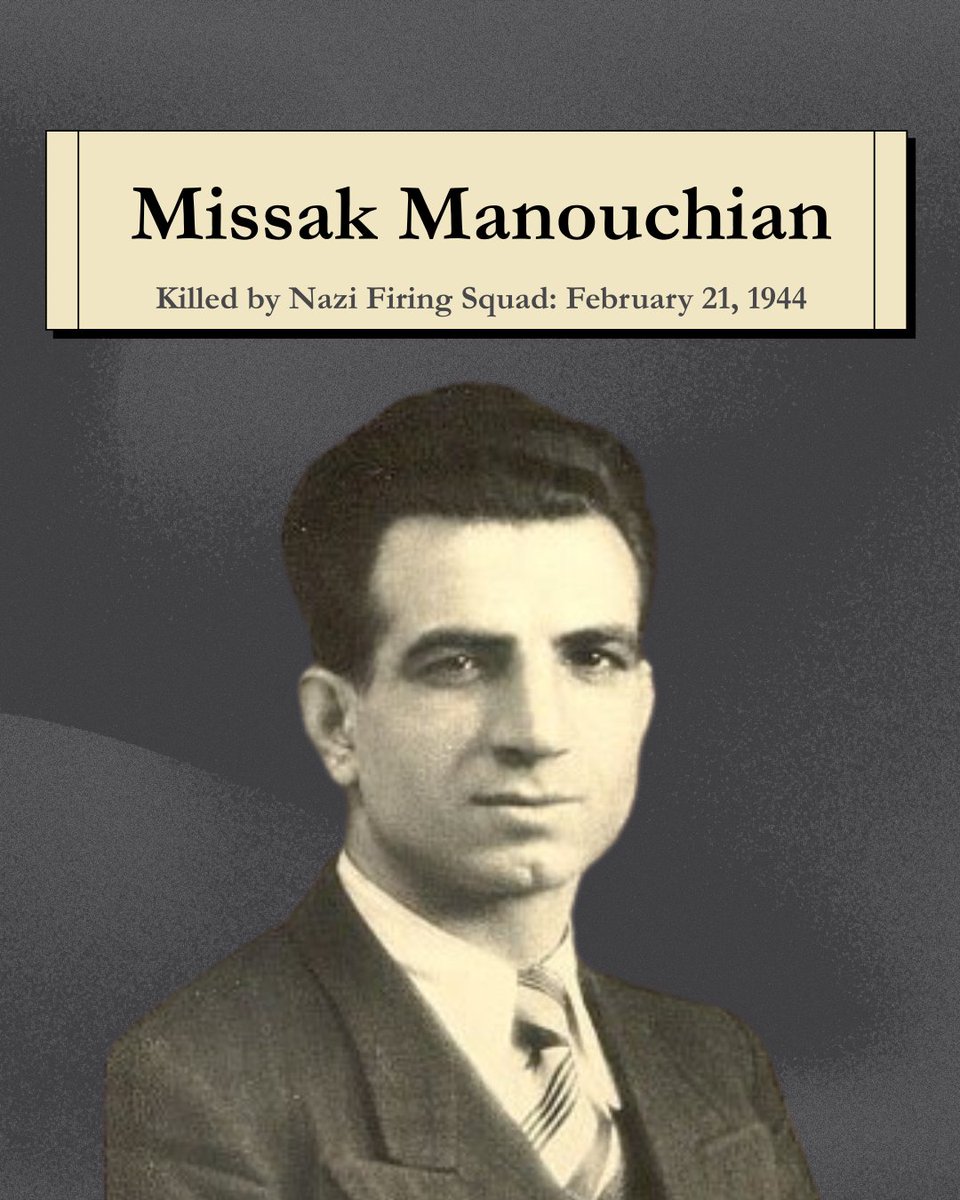
So in the spirit of that title, I’ll honour Missak Manouchian, Armenian poet, communist activist, and French Resistance leader and hero who saved many Jews during World War II
He now rests in the Panthéon in Paris.

On February 21, 1944, Missak Manouchian, an Armenian poet and communist, was executed at Fort Mont-Valérien. He led the FTP-MOI, a group of immigrant fighters in the French Resistance, which carried out attacks on German forces.
Manouchian and 21 members of his group had been arrested months earlier, betrayed by a captured comrade, tortured, and put on a propaganda show trial by the Germans.
The only surviving member, Olga Bancic, was later deported to Germany and executed.
In 2024, Manouchian and his wife Mélinée were entombed in the Panthéon on the 80th anniversary of their deaths.
Information sourced from Liberation Route Europe and Normandy American Heroes
#ClaimsConference_Partner
BMF_Partner
#HistoriesAndMysteries
#CJH
6
120

Graham: Ignore advisors, ignore the vast majority of Americans, ignore the Constitution, ignore international law, just bomb Iran and do whatever Israel wants.
Really in tune with the needs of his constituents in South Carolina.

🚨🇺🇸🇮🇷Senator Lindsey Graham (R-S.C.) told me on Saturday that several people around President Trump are advising him not to bomb Iran. Graham urged the president to ignore them and go ahead with a strike. My story on @axios
axios.com/2026/02/22/graham-…
18
123
507
13,411
Caroline Քարոլին کارولین retweeted

Bring all of the US troops home…
And no U.S. troops will die for Israel.
They should be defending America and not used for the service of any other nation.

WATCH: Secretary of War Pete Hegseth says Grace at the annual bipartisan Governors dinner, and prays for U.S. troops.
34
108
543
7,465
Caroline Քարոլին کارولین retweeted

Feb 19
“The opening assault, which if authorized could come within days, would target a few military or government sites.” wsj.com/world/middle-east/tr…

2
3
687
Caroline Քարոլին کارولین retweeted
What’s striking about these continuing leaks to the press - each one with more operational detail - is the obvious question: why telegraph an attack in advance?
There were no such warnings prior to the June 2025 strikes.
This doesn’t mean there won’t be some form of military action. But you don’t normally signal that figures like Khamenei, his son Mojtaba, or senior IRGC leaders could be targets. Israel was able to decapitate the top tier of the IRGC last June precisely because the other side didn’t see it coming.
Which suggests these leaks look less like operational preparation and more like calibrated pressure - intense psy-ops. The White House appears to be exploiting internal divisions within Tehran’s leadership, trying to erode the belief that the regime can simply ride out the storm and avoid major concessions.
This kind of messaging forces decision-makers in Tehran into a fraught internal debate. Some in the ruling elite will insist Trump is bluffing. Others will ask: What if he isn’t? The goal is to inject enough uncertainty that Iran concedes as much as possible at the bargaining table.
If diplomacy stalls, the logic becomes sequential escalation: strike, then ask “Are you ready now?” If not, strike again. Rinse and repeat - until the pressure produces movement. That’s broadly consistent with recent reporting that Washington is considering limited strikes intended to coerce concessions.
The danger, of course, is overshoot: excessive kinetic force could destabilize the regime to the point that no credible negotiating partner remains.
As I argued in this recent piece [geopoliticalfutures.com/iran…], the military option - borrowing the baseline logic of the Venezuela model - isn’t necessarily about regime change, but about selective coercion: targeting the actors blocking a deal while empowering those prepared to negotiate.
But pulling off this strategy demands razor‑sharp intelligence - and the capability to calibrate strikes with surgical precision to shape a precise political outcome.

💥🇺🇸🇮🇷One of the plans the Pentagon presented to Trump included killing Iran's Supreme Leader Ali Khamenei and his son Mojtaba, who is seen as a potential successor, a Trump adviser said. "What the president chooses no one knows. I don't think he knows", the adviser added
10
11
53
13,195
Caroline Քարոլին کارولین retweeted

10h
This is why Iran has been around for 5000-7000 years: it is a freaking layer-after-layer-after-layer fortress controlling entire Gulf of Hormuz. It is probably the most difficult country in the world in case of war.
PEACE IS THE WAY 🙏

12
33
243
11,858
82 years ago today…
In memory of Missak Manouchian, Armenian poet, activist, and leader in the French Resistance during the Second World War.
He is remembered as a hero of the Resistance and now rests in the Panthéon in Paris.
21 Feb 2025

81 years ago today, Nazi troops executed Missak Manouchian and 21 of his comrades at Fort Mont-Valérien near Paris. 🇦🇲🇫🇷
From an orphan who escaped the Genocide to a lathe operator, a model for sculptors, a political newspaper editor, a poet, and a translator of French poetry into Western Armenian—to the secretary of the Relief Committee for Armenia (HOC), and finally, a commander of 50 resistance fighters against fascism—this episode of Zartonk is dedicated to Missak Manouchian.
4
110
Caroline Քարոլին کارولین retweeted

There is zero evidence, zero, that Iran is trying to "obliterate our country" with nuclear weapons. There is a lot of evidence that Iran wants a nuclear deterrent because Israel and America are constantly threatening to depose its government.

You are a disgrace. Young people are being slaughtered by the tens of thousands. You don’t give a damn. Women are treated like animals. You don’t give a damn. The Islamist regime has murdered a thousand Americans. You don’t give a damn. They build ballistic missiles/ICBMs and are hellbent in developing nuclear warheads to obliterate our country. You don’t give a damn. The fund terrorist groups against us. You don’t give a damn. “No war with Iran.” Iran is at war with us, genius! But you’re so beholden to the ideological Marxists for your career you just don’t give a damn.
24
145
882
18,064
Caroline Քարոլին کارولین retweeted
The American public is instinctively anti-war, so when you ask our leaders why we're going to war they just admit outright they don't care what the public thinks

3
50
173
3,446
He’s trying to convince his audience that the illegal war against Iran is the right path, not through civilised debate, but with declarations like:
“Your moral compass is broken.”
“We know the truth. You don’t.”
Feb 20

The truth about America and Israel being Iranian peoples Ally in removing the Islamic Republic.
4
2
26
1,057
Caroline Քարոլին کارولین retweeted

Iran has done nothing to the US
I feel like I went back to 2003 in a time machine
It's Iraq and "weapons of mass destruction" all over again
This is about what one country wants, and that's Israel
126
251
1,840
20,107
Caroline Քարոլին کارولین retweeted

BREAKING: US officials say hundreds of military personnel at base in Qatar set to be relocated amid possible strike on Iran, according to ABC News report.
105
529
3,985
309,578


Why exactly are we going to war with Iran?
18
530
5,180
50,709